If you’ve spent much time among planner or journaling communities lately, you’ve probably seen the term “commonplace book” appearing everywhere: on Instagram layouts, planner reels, TikTok journaling chats, and blogs about living a more intentional, creative life. There’s a reason for this revival—commonplacing isn’t just a centuries-old habit, it’s the perfect bridge between reading, reflection, and creativity that so many of us crave in our paper planning routines. In this guide, you’ll discover why commonplace books are enjoying a vibrant comeback, the fascinating (and surprisingly relatable) history behind them, what people collect in these books, and detailed strategies to kickstart your own commonplace practice—even if you’ve never kept one before.
The Resurgence of Commonplace Books in Modern Planning
Today, commonplace books are popping up everywhere within the planner and journaling world. For many Hobonichi, bullet journal, and creative notebook lovers, they’ve become a daily staple—not a separate project, but an integrated part of capturing inspiration, tracking learning, and making paper planning personal.
Planner fans are carving out sections in their weekly or daily layouts just for quotes, book notes, podcast gems, or bright ideas.
Journaling communities on TikTok and YouTube (including our own) are sharing real-time flips of commonplace pages, full of eclectic entries—with no pressure to be perfect.
This community-driven resurgence is fueled by a shared love for paper, pens, and the tactile joy of collecting and curating inspiration in a way that digital note apps just can’t match.
Brief History: Where Did Commonplace Books Begin?
The roots of commonplacing run deep, reaching back to the Renaissance. Back then, scholars and everyday readers alike would copy down memorable lines, ideas, and observations in hand-bound notebooks. These books, known as “commonplaces,” acted as personal storehouses of wisdom and reflection.
Philosopher John Locke revolutionized the art of indexing, publishing a popular system for organizing entries by theme. His approach made the commonplace book searchable—a true proto-bullet journal!
Naturalist Carl Linnaeus built systems for tracking scientific observations and discoveries, demonstrating that commonplacing isn’t just for literature lovers—it’s for anyone seeking to weave creativity and knowledge together.
Throughout Europe and America, authors, thinkers, and artists (including Virginia Woolf and Mark Twain) turned to their commonplace books as lifelong companions—a place to collect flares of brilliance and quieter moments alike.
What Exactly Goes into a Commonplace Book?
There are no hard rules for what to collect. A commonplace book is less a finished journal and more an evolving, deeply personal archive. Some popular ideas include:
Favorite quotes from books, poems, podcasts, or songs
Ideas, insights, and personal a-ha moments
Reflections, micro-essays, or handwritten responses to what you encounter
Vocabulary or concepts worth remembering
Lists of future reading, recipes, routines, or life lessons
Song lyrics or lines of poetry that resonate with you
The magic comes from making each entry your own: jotting a note, highlighting why it matters, and letting meaning accumulate over time.
Should You Keep a Commonplace Book?
If you’re someone who highlights, screenshots, or scribbles down ideas (and then loses them), the answer is a resounding yes. Commonplacing is for anyone who:
Wants a home for inspiration—one that’s not only digital
Has a beloved pile of half-used notebooks ready for purpose
Enjoys journaling, planning, or daily reflection and craves a dash of literary or creative magic on the page
Finds inspiration everywhere, but needs a way to organize and revisit those sparks
Some real, everyday benefits:
Handwriting entries improves memory and helps ideas stick
Seeing unrelated quotes side by side often ignites new connections
Flipping back is like discovering a timeline of your own growth and curiosity
It offers perspective: you’ll see how your thinking evolves with every few months of entries
Step 1: Pick Your Format and Make Space
Your commonplace book can be a stand-alone notebook, a dedicated section in your existing planner (like a Hobonichi Cousin or Weeks), or a journal insert tucked into your favorite folio. We recommend starting simply, using a notebook and supplies you already enjoy.
For dedicated notebooks, classic A5 or B6 sizes are perfect—they leave plenty of breathing room for notes, stickers, and sketches.
For planner users, reserve a section (weekly notes, monthly spreads, or extra pages at the back) and mark it out with a divider sticker or washi tape so it stands out.
Traveler’s notebook fans: Use one insert for planning, another for your commonplace entries—keeping inspiration and daily life neatly linked.
Step 2: Choose a Flexible Structure (That You’ll Stick With)
The best commonplace books balance freedom with a touch of organization. Here are two tried-and-true approaches:
Chronological: Write new entries as they come. Date each entry, jot the source, move on. This is simple and ideal if you’re already journaling daily.
Topical: Divide your journal into broad topics (Reading, Work & Creativity, Self-Compassion, etc.), then add quotes or ideas to each section as you go.
Make it easily searchable by creating an index or table of contents at the front:
Reserve 2–4 pages for contents
Number your pages as you fill them
List topic titles and page numbers in your index—it doesn’t need to be perfect!
Step 3: Start Capturing—First 10 Entries in a Week
To build momentum, try to add at least 10 entries in your first week. Here’s a gentle routine:
Open your planner or the book you’re reading
Find one quote, idea, or observation from your day
Write it in your commonplace, along with source and your own brief reflection
Optional: add a tag or color code so themes are easy to spot later (Creativity, Mindfulness, etc.)
This routine can be attached to your existing morning coffee, evening reading, or daily planner check-in for sustainability. Even a one-line entry counts.
Using Stickers and Creative Tools to Support Your Practice
Visual cues and prompts make adding to your commonplace book more inviting and less intimidating.
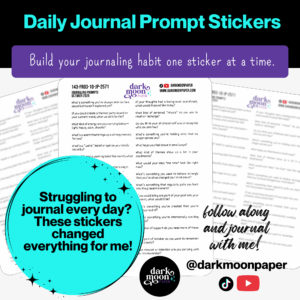
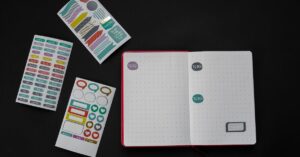
Journal Prompt Sticker Sheets can be used as daily or weekly headers in your commonplace book. Each prompt gives you a starting point for reflection—perfect when you want variety or if you’re not sure what to capture. These stickers fit A6 and up journals, are timeless, and available as individual monthly sheets or in bundles.
Reserve the left side of a spread for your prompt and written response. Dedicate the right side to quotes and ideas from your current reading that relate to the week’s theme.
Use sticker prompts as themed dividers, creating sections like “Joy,” “Courage,” or “Art,” and fill them over time.
Stickers make your pages inviting, which means you’re more likely to keep returning to your commonplace book.
Decorative stickers—like Cookie Hearts Sticker Kit Boosters—are handy for highlighting your favorite entries or visually dividing sections (say, between “Book Notes” and “Life Lessons”). You might use a heart sticker for your most meaningful quote of the month or add a checklist box for books or articles you still want to mine for inspiration.
Sample Commonplace Book Layouts in Popular Planners
It helps to see how commonplace books take shape in different setups:
Hobonichi Cousin (A5): Use the daily page top half for prompt/response and the bottom half for quotes from that day’s reading. Reserve a monthly notes page as an index of “Top 10 Quotes.”
Hobonichi Weeks: Use weekly schedule for normal planning, reserve the right notes page each week for commonplace entries centered around a single theme or topic—add a journal prompt sticker at the top.
Standard Notebook: Kick off with a two-page spread for your index. Add spreads by topic (Creativity, Self-Compassion, Productivity, etc.), using stickers or washi for headers. Fill organically, updating your index as you go.
Practical Tips to Build a Lasting Habit
Attach commonplacing to a habit you already have. After your morning planning, add one entry. After reading, reflect on a passage and add it to your book.
On busy days, keep it tiny: Just write a quote, source, and tag. That’s enough!
Periodically review and revisit. Once a week or month, flip through and mark favorite ideas with a symbol or sticker. Create a “Best Of” page at the front or back for highlights you want close at hand.
Tie quotes to your life. For each entry, add a line: How does this apply to me now? What small action might this inspire?
Free Resources and Community Support
If you love free, printable creative tools, our Freebies Library offers monthly journaling prompts, planner pages, and handwriting worksheets—ideal companions for commonplacing. Artist Kat shares daily journaling ideas and real entries on TikTok and YouTube, so you can follow along or just be inspired to open your own book.
Pick a journal or planner section you already have
Block out 2 pages as an index or contents
Come up with three broad headings that feel relevant (Creativity, Work & Focus, Gentle Reminders, etc.)
Open a book, scroll a saved quote, or find a line from a podcast or film that stayed with you. Copy it, note the source, and add a quick line about why you chose it.
That’s it—you’ve created your first commonplace entry. From here, your book will become a living archive of daily inspiration and creative reflection.
Build Your Own Commonplace Archive
Commonplace books are open to everyone—regardless of whether you’re a lifelong planner, a new journaler, or simply someone looking for a tangible way to keep track of all the inspiration swirling around you. Every entry you add makes your notebook a more powerful tool for creative living and self-discovery.
If you’d like ongoing inspiration, prompts, and creative structure, explore our Journal Prompt Sticker Sheets, Cookie Hearts Sticker Kit Boosters, and the Freebies Library. Join our community on TikTok and YouTube, or simply browse the shop for ideas. We’re here to help you turn your commonplace book into a daily source of delight, motivation, and gentle creative challenge.
Our custom stickers are a fuss-free way to brighten up your planner pages with perfectly-sized designs that add a spark of personality to every layout.
Planner stickers make organizing easy, fun, and personal! Add color, creativity, and structure to every page, transforming your planner into a tool that reflects you. Perfect for tracking, decorating, and staying inspired daily!
I’m Kat, the artist behind Dark Moon Paper. I started this studio to blend my love of art, handwriting, and the small rituals that make everyday life feel magical. My sticker kits and creative resources are made to set the mood, spark ideas, and give you a little escape from the ordinary.
I create from a cozy studio in the Oregon woods, surrounded by nature and a clear view of the stars.
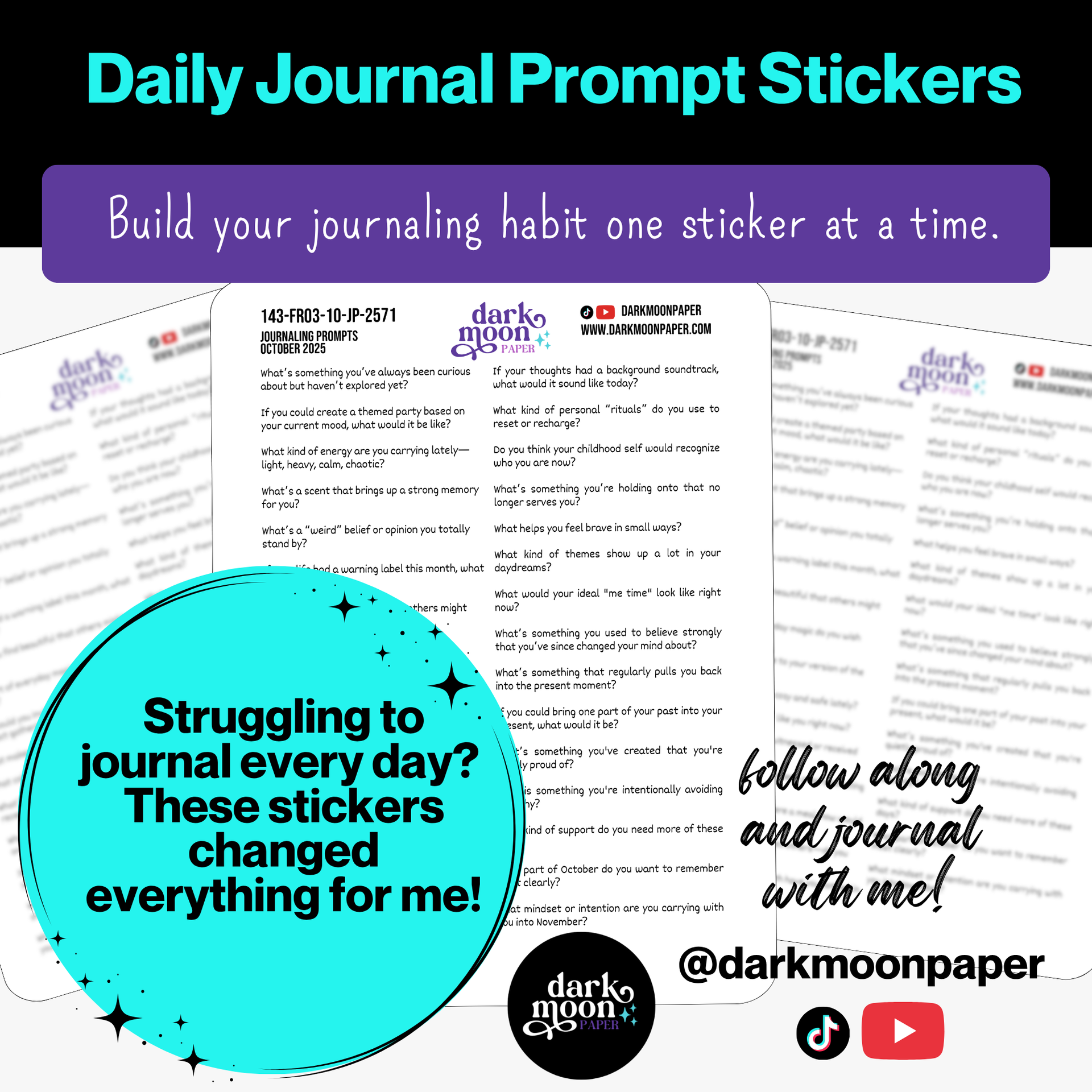 Journal Prompt Sticker Sheets
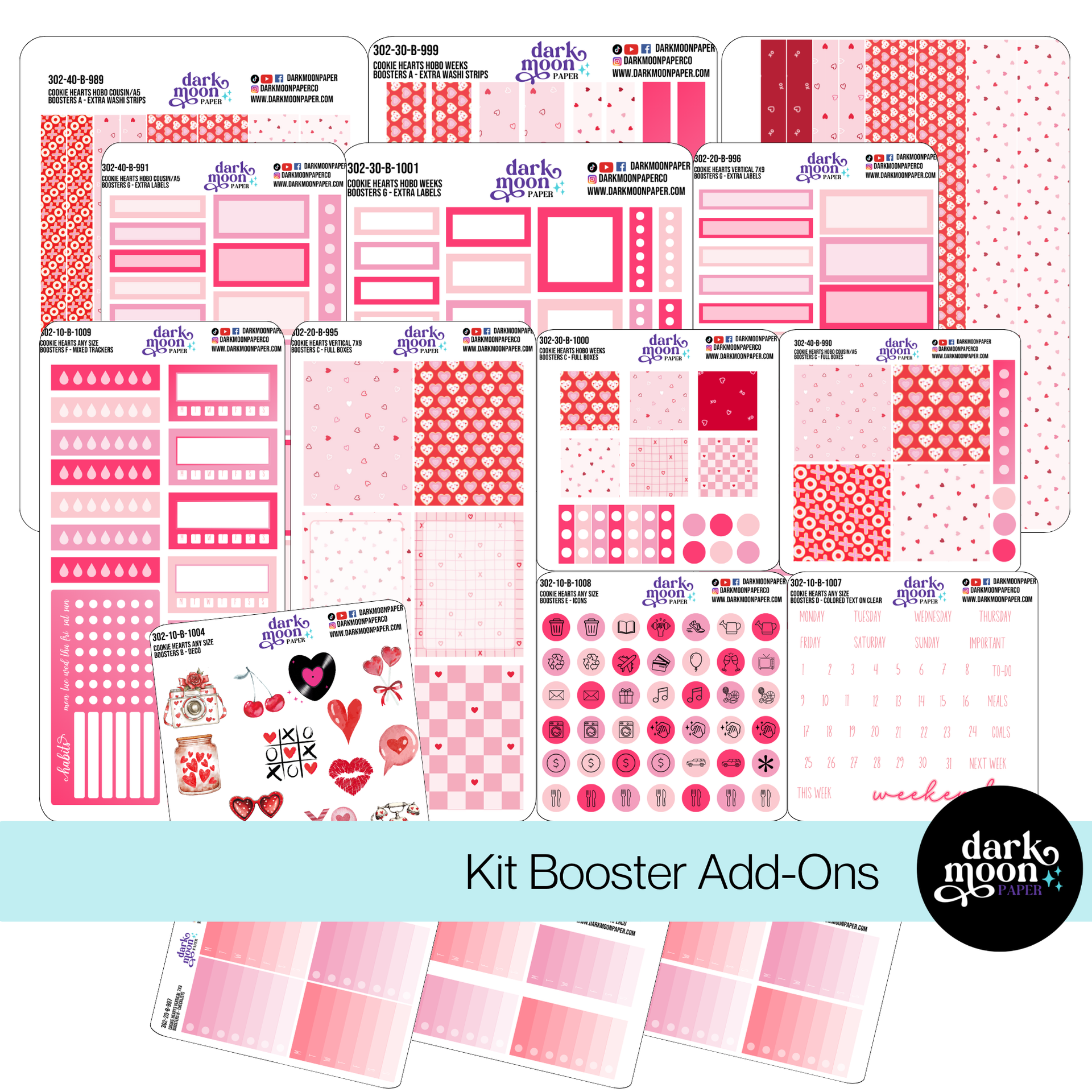 Cookie Hearts Sticker Kit Boosters